the hostgator coupon Pingates.com free sexy nude: SPACE
Showing posts with label SPACE. Show all posts

Sunday, March 11, 2012

Solar storm passes without incident


NASA image showing extreme ultraviolet wavelengths on Sun's surface


A solar storm in the Earth's magnetic field has passed by the Earth with minimal effects, experts say. "The freight train has gone by, and is still going by, and now we're just watching for how this is all going to shake out," said Joseph Kunches, a scientist with US weather agency Noaa.

The last of the charged particles from the Sun will pass Earth Friday morning. There had been fears that this "coronal mass ejection" could wreak havoc with satellites or power grids on Earth. However, Dr Kunches said, "all told, it's not a terribly strong event".

Some air traffic was re-routed away from polar regions on Wednesday and Thursday, but no large-scale effects of the storm have been reported. "This week's solar storms have been stronger than those of recent years but moderate when viewed over the longer term," said Paul Cannon, director of the Poynting Institute at the University of Birmingham.

"Most technological systems appear to be behaving well so far. However, given the Sun's activity forecasters will be closely watching the geospace environment over the next few days." The current coronal mass ejection (CME) - travelling at some 1,300km per second - began arriving at Earth on Thursday morning, after the release of two particularly strong solar flares earlier in the week.

Activity near the Sun's surface rises and falls through an 11-year cycle that is due to peak in 2013 or 2014. Some solar flares result in CMEs - the launch of a huge bubble of charged particles hurtling toward the Earth at speeds up to millions of kilometres per hour.


The Earth's magnetic field protects it from the constant onslaught of high-energy particles from the Sun and elsewhere in the cosmos. However, the solar storms that mark the arrival of CMEs can disrupt the field enough to have an effect on the Earth's surface - causing current spikes in power grids or disrupting navigation devices. Among the more benign effects is that the magnetic-field disturbance can make the Northern Lights visible at lower latitudes. But it is often unclear, even up to the last minute, just how grave or spectacular the effects will be on Earth - that depends on the magnetic alignment of the material within the CME, which is difficult to predict.


Because different parts of the bubble can have different alignments, scientists say that the storm could still have adverse effects as it passes. "The magnetic field in the solar wind is not facing in the direction of danger. But it could change, into the early evening," said David Kerridge, director of geoscience research at the British Geological Survey.

Although space weather scientists have seen no more significant activity since the solar flares that launched the current storm, scientists around the globe are still keeping a close watch on the Sun. "The part of the Sun where this came from is still active," Dr Kerridge said. "It's a 27-day cycle and we're right in the middle of it, so it is coming straight at us and will be for a few days yet. We could see more material," he explained.

But regardless of its eventual extent, this episode of solar activity is a preview of what is to come in the broader, 11-year solar cycle. Dr Craig Underwood, from the Surrey Space Centre, UK, said: "The event is the largest for several years, but it is not in the most severe class. We may expect more storms of this kind and perhaps much more severe ones in the next year or so as we approach solar maximum. "Such events act as a wake-up call as to how our modern western lifestyles are utterly dependent on space technology and national power grid infrastructure."


1 - Solar flare and eruption. 


2 - Billions of tonnes of superhot gas containing charged particles is released. 


3 - Particles drawn to poles collide with atmosphere causing polar lights.


Many storms are benign; this storm could enable skywatchers to see the Northern Lights from parts of the northern US and northern UK. But the strongest storms can have other, more significant effects.

In 1972, a geomagnetic storm provoked by a solar flare knocked out long-distance telephone communication across the US state of Illinois. And in 1989, another disturbance plunged six million people into darkness across the Canadian province of Quebec.


What are the Solar Storms?

The sudden release of magnetic energy stored in the Sun's atmosphere can cause a bright flare


This can also release bursts of charged particles into space


These solar "eruptions" are known as coronal mass ejections or CMEs


When headed in our direction, the charged gas collides with the magnetic "sheath" around Earth


The subsequent disturbances in the Earth's magnetic envelope are called solar storms


They can interfere with technology: satellites, electrical grids and communications systems


They can also cause aurorae - Northern and Southern Lights - to be seen at lower latitudes

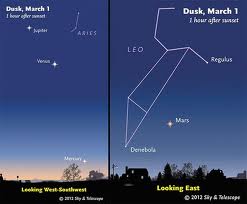
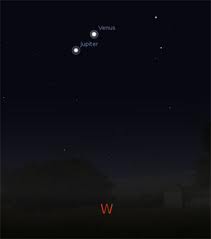
How to see five planets in one night


For the first time in over a decade, people can catch a glimpse of five of the planets in the solar system, over the course of one night.


Astronomer Francisco Diego has said that we can make the most of a special event in the skies over the coming days.


Saturday, March 10, 2012

First amateur video of Challenger shuttle explosion revealed


More than 25 years after the space shuttle Challenger exploded shortly after liftoff, an amateur video of the accident has surfaced.


The newly released video, taken by Jeffrey Ault, and licensed from Ault by the Huffington Post, offers a closer and more intimate view of the tragedy than have other video reports previously released by the news media. Ault was part of a live audience gathered to watch the Challenger take off from the Kennedy Space Center, less than 10 miles from the launch site. He shot the video on his Super 8 home video camera, and it sat for 26 years in a box in his house. "I was hoping to see an event that I would remember for the rest of my life," Ault told. "I did. Just not the way I would have liked to. Unfortunately, it became one of those long lasting memories for all the wrong reasons."


The initial explosion happens at around the 1:20 mark in the video. And it's clear the spectators don't grasp what is happening right away, with one person in the background whispering, "Oh, that's beautiful," as the shuttle's contrails split in two and begin descending back toward the ground below.


Shortly after the explosion, former NASA public affairs officer Steve Nesbitt can be overheard announcing from the Mission Control Center: "Flight control is here looking very carefully at the situation. Obviously a major malfunction."


And finally, at the 2:50 mark, Nesbitt can be heard announcing that the Challenger has exploded. The video ends shortly after that. The Challenger accident brought all US shuttle flights to a halt and ignited a debate at the time about whether the shuttle program should even continue.


Monday, March 5, 2012

More Than 1,000 Potential New Planets Found


More than a thousand potential new planets have been found outside our solar system—nearly doubling the number of candidates discovered so far by NASA's Kepler space telescope, according to a new study. The fresh batch of Kepler Objects of Interest, or KOIs, emerged from an analysis of mission data gathered between May 2009 and September 2010.


The data revealed 1,091 possible new planets, bringing the total count to 2,321—up from 1,235 candidates formally announced last February. What's more, "we have a statistical reason to think at this point that something like 90 percent of them are probably real planets," said study co-author Ronald Gilliland, an astronomer at Pennsylvania State University and a member of the Kepler team.


So far, the Kepler team has confirmed the existence of 61 alien planets, including an Earthlike world that orbits its star at the right distance for life.

Zeroing In on Earth's Twin

Aside from the sheer number of new candidates, astronomers are excited that a substantial fraction of the haul appears to be made up of small, cool worlds that are more similar to Earth than many of the previous finds.


For example, Kepler's latest discoveries include 196 new Earth-size planet candidates, nearly quadrupling the number of similar candidates announced last year. The number of potential super-Earths—planets that are about two times the mass of Earth—also saw a big jump, with 416 new candidates announced.


The trend toward finding smaller worlds in the Kepler data suggests that the spacecraft, launched in March 2009, may finally be nearing its goal of spotting true Earth analogs capable of supporting liquid water—and perhaps life.

"To be able to detect analogs of Earth, which by definition have a one-year [orbital] period, you have to do observations for a few times during that one-year period," Gilliland explained.

How You Can Help Confirm a New Planet

Before they can be recognized as true planets, though, the new KOIs must go through a rigorous confirmation process that can take from six months to a year. One major concern for astronomers is that what looks like a planet may in fact be a false positive created by eclipsing stars or some other phenomena.


The Kepler team has developed software to rule out these alternative explanations, but members of the public can also help by joining citizen-science projects that sift through Kepler data. "The team very much appreciates that there's a large enthusiastic community interested in doing this," Gilliland said.


Thursday, March 1, 2012

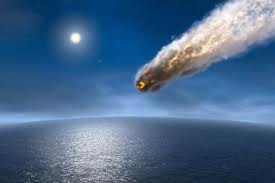
Asteroid could strike Earth in 2040


Humongous asteroid could strike Earth in 2040

The 460-foot wide asteroid 2011 AG5 could be on a collision course with our planet. But the odds are very small, say scientists. 


The space rock presents a "decision challenge" to the international community, Schweickart suggested, "in the unlikely chance that its current low, but significant probability of impacting Earth in 2040 continues to increase after additional tracking becomes available."

Schweickart spotlighted a rough Association of Space Explorers analysis of the options to deflect the asteroid in the future, in the unlikely scenario that the Earth impact probability continues to increase.


He also provided to the Action Team several new appraisals of options for deflection of asteroid 2011 AG5 to avoid a potentially dangerous Earth encounter in 2040.


A decision date for a keyhole deflection is very soon, if not now, Schweickart suggested. Asteroid 2011 AG5 represents an actual threat that underscores the need for a NEO hazard decision-making structure within the UN COPUOS, he said.


Based on the latest analysis, Schweickart reported, a deflection campaign delayed until after the 2023 close approach appears marginally possible, as long as a decision to commit is made immediately thereafter.


In the low-probability case in which the impact threat of the asteroid persists beyond its 2013 apparition, "should a keyhole deflection campaign be foregone — for whatever reason — the international community may be faced with the difficult decision of choosing between an expensive multikinetic impactor or a nuclear explosive to prevent an impact should the NEO indeed pass through the keyhole," Schweickart said.


The timelines that would be required to mount a successful deflection of the asteroid might be challenging. But first things first — researchers stress that more study of the asteroid’s trajectory is called for. The next tracking opportunities of 2011 AG5 will occur in September 2013, and then again in November 2015.


Wednesday, February 29, 2012

World’s biggest astronomy project: ALMA telescope


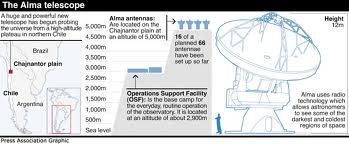
In the high desert of northern Chile, a new telescope with a revolutionary design is coming online – ready to probe deep into space. It will explore places beyond imagination – the distant birthplaces of planets, stars and galaxies century – to help us understand our place in the cosmos. Astronomers call this new telescope ALMA, which is the Spanish word for soul.


According to the scientists, one nation alone couldn’t build ALMA, whose official name is the Atacoma Large Millimeter/Submillimeter Array. Working with the host country Chile, some of the largest observatories in the world joined together for ALMA. These include the National Radio Astronomy Observatory in North America, the European Southern Observatory and observatories in Japan, Brazil and throughout Latin America.


Sixty-six large radio dishes connect together to form ALMA. These dishes are located 30 minutes by car from the town of San Pedro de Attacoma in Chile – at the top of the world – at an altitude of 16,500 feet.


At that height and in the desert, there is little water vapor in the air. Those conditions are perfect for ALMA because water in the air blocks starlight in the portion of the “electromagnetic spectrum” that scientists want to study.


ALMA will observe starlight at wavelengths invisible to your eye – the long infrared wavelengths of starlight. Space observatories, like the Hubble Space Telescope, orbit high above the blanket of Earth’s atmosphere to see the universe at these wavelengths. Astronomers hope that ALMA will be even better than space telescopes at exploring the infrared universe – because they can build it much larger on land than they can in space today.


They hope to learn the details of where stars like our sun and planets like our Earth come from. Today, the process of star and planet formation is poorly understood. The ALMA array – with its ability to see in at infrared wavelengths – will help us probe the vast clouds of dust surrounding new stars and planets.


Farther away in space, and farther back in time, are very distant galaxies – believed to have undergone an extreme burst of star formation long ago, as the universe evolved toward its present state. Astronomers want to use ALMA to learn how this burst of star formation began, how long it lasted, and what it may mean for the part of the universe we inhabit today.


Antennae Galaxies, two galaxies in the process of colliding. The ALMA telescope found signs of gas clouds crashing into each other in these galaxies, in places where new stars are forming. That discovery verified astronomers’ theories that a shock wave from a colossal collision might initiate star formation.


ALMA has already verified astronomical theory stating that star formation heightens when galaxies collide. In 2011, as the dishes of ALMA began to come online, astronomers used them to look at the Antennae Galaxies – two large spiral galaxies like our Milky Way – known to be undergoing a vast cosmic collision.


It’s a glimpse of a violent past for our universe that might provide clues to how ordinary stars like our sun – and planets like our Earth – came to be.